
How to Photograph Rescue Cats: A Volunteer's Quiet Guide to Better Photos
Good photos help rescue cats find homes faster. A practical, welfare-first guide for shelter volunteers — covering light, posing, gentle handling and the small details that move adopters.
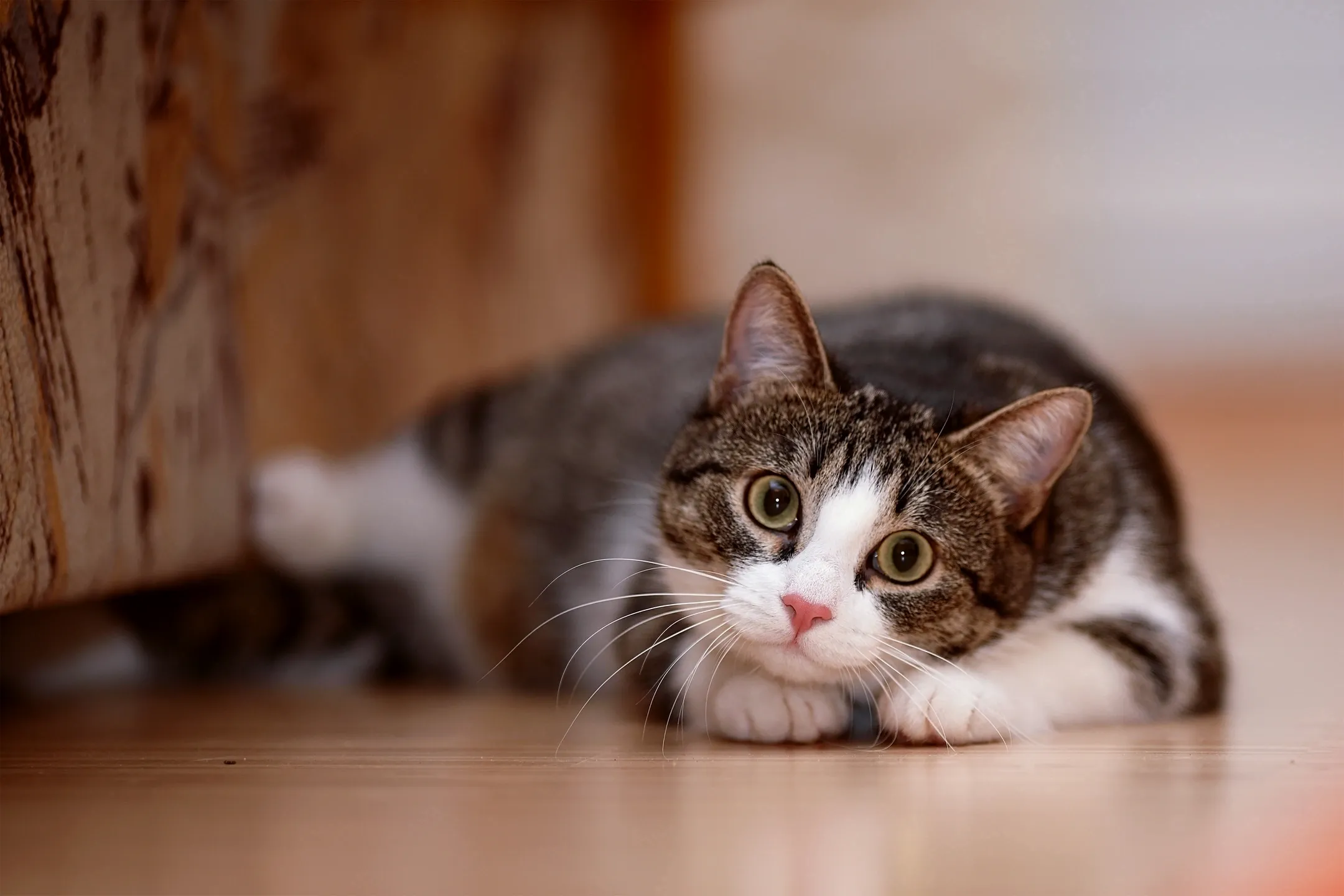
If you volunteer at a rescue centre, you already know the maths: better adoption photos mean faster adoptions, which means more space for the next cat who needs it. A good photo can shave weeks off a cat’s stay.
You don’t need a fancy camera. A modern phone, a window, and a calm ten minutes will outperform almost any setup that isn’t.
Here’s what consistently works.
The setup, in order of priority
1. Light is the whole game
Find a window with soft, indirect light. Position the cat so the light falls on the side of their face, not behind them (a backlit cat becomes a silhouette).
- Cloudy day: perfect. Diffuse window light is the gold standard.
- Direct sun: harsh shadows. Move further back from the window or close a thin curtain.
- Overhead fluorescent: turn it off if you can; it makes everyone look ill, cats included.
Avoid using the phone’s flash. It causes pupil flare, red-eye, and can startle anxious cats.
2. Get the camera at eye level
This is the single biggest amateur-to-decent jump. Cat at eye level looks like a peer. Cat shot from standing-human height looks like an object on the floor.
- Sit on the floor.
- Lie on your stomach if the cat is small or in a cubby.
- Hold the camera with both hands and brace your elbows on the ground.
You’re aiming for the cat’s eyes to be in roughly the centre or upper third of the frame.
3. Focus on the eyes
Tap the cat’s eye on your phone screen before each shot. That tells the phone what to focus on — a tack-sharp eye is what makes a photo feel “real” even if the rest is slightly soft.
For cats with a darker coat, a touch of light catching the iris (a “catchlight”) brings the whole portrait to life. Position the cat’s head so they’re facing toward the window slightly.
4. Background: simple and clean
A busy background — clutter, signage, bars on a kennel — pulls the eye away from the cat. Adoption photos work best with:
- A plain wall (any colour that isn’t the cat’s coat colour).
- A folded blanket on a neutral surface.
- A neutral cushion or fleece.
If you’re shooting inside a kennel and can’t move the cat, bring a piece of plain fabric to drape behind them. It transforms the shot.
Bring out the cat’s personality
A standard portrait is fine, but adopters fall in love with cats whose personality shows. Aim for one or two of each across the session:
- A relaxed full-body shot — cat lying down comfortably, ideally with paws in view (paws sell adoptions).
- A close-up head portrait — eye level, soft expression.
- An ear-tip / face-detail shot if the cat has distinctive markings.
- The cat doing something cat-like — slow-blinking, kneading, watching a string toy, peeking out of a box.
If you can, capture them with a slow blink in progress, half-eye-closed. Adopters read that as “friendly.”
Working calmly with anxious cats
Welfare comes first. A photo is never worth stressing a cat into a state.
A few principles:
- Let the cat come to you. Sit on the floor, ignore them for a few minutes, and let curiosity bring them over.
- Don’t restrain them for the camera. A cat being held against their will is visible in every frame.
- Skip the costumes. Hats, bow-ties and props are stressful for most cats and don’t help adoptions — they make the cat look like a prop themselves.
- Use a quiet voice and slow movements. Wand toys, treats and feathers all work better than direct grabbing.
- Know when to stop. A cat with flat ears, dilated pupils, swishing tail or trying to retreat has told you the session is over. Try again another day.
For shy cats in particular, sometimes the best photo is just their home space, with them peering out from a hiding spot. That tells an honest story to adopters — and the right adopter for a shy cat is one who appreciates that.
The boring practical bits
- Shoot horizontal and vertical versions — your rescue’s website will want landscape, but Instagram and shelter signage want vertical.
- More frames is better. Take 20, keep 3. Cats blink, look away and yawn at random; you need options.
- Clean the lens. Phone lenses live in pockets full of fluff. Wipe before each session.
- Process gently. A slight brightness boost and a small contrast bump is usually enough. Heavy filters make cats look unreal — which adopters trust less, not more.
What to put in the caption
The photos open the door; the caption walks the adopter through it. A few things that consistently help:
- The cat’s name and approximate age.
- One sentence on temperament from staff who’ve handled them (“Confident, loves chin scratches, hates being picked up.”)
- Any “needs to know” flags: cats only home, no young children, needs an experienced owner, indoor only, medical condition managed by X.
- A specific call-to-action: come and meet them, ring this number, fill in this adoption form.
Honest captions don’t lose adoptions — they pre-filter for the right adopters. Cats stay longer when adopters return because the cat wasn’t as advertised.
And finally
If you’ve got 20 minutes a week and a phone, this is genuinely one of the highest-leverage things a rescue volunteer can do. Good photos and good captions move cats. Moving cats saves cats.
Sources
Related stories
How To Potty Train A Cat
A calm, welfare-first guide to adopting your first cat — covering rescue choices, what to ask the shelter, and how to set up your home for the all-important first week.
Adopting Your First Cat: A Calm, Welfare-First Guide
A calm, welfare-first guide to adopting your first cat — covering rescue choices, what to ask the shelter, and how to set up your home for the all-important first week.
Shy Tuxedo Cat Finds a Safe Place to Raise Her Four Kittens and Begins to Trust Again
A timid tuxedo cat named Raea found the safe foster home she needed just before giving birth to four healthy kittens.

7 Benefits of Feeding Cats Wet Food
Wet food offers more than moisture. It can help support hydration, texture preferences, diet variety, and feeding flexibility for many cats.